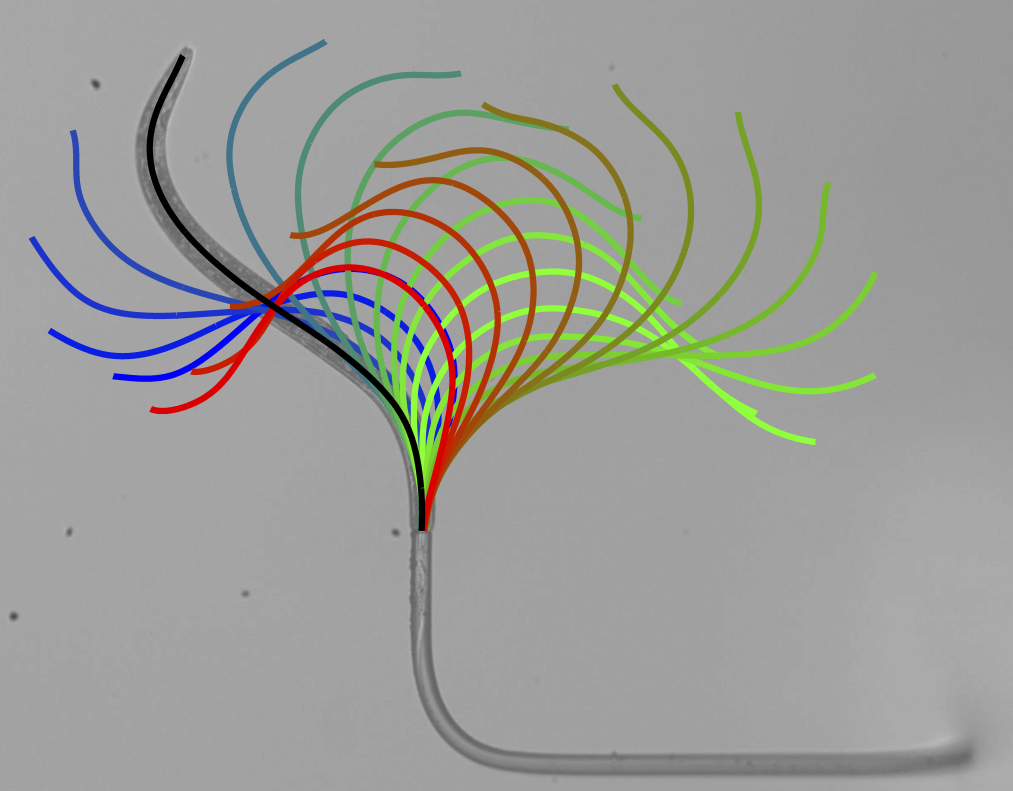
RESEARCH OVERVIEW
The main focus of our research group is the study of soft and living matter at surfaces and interfaces. The physics of soft materials is distinct from that of hard matter, as the weaker intermolecular bonds result in a large response to external stresses. You, and I, are soft, squishy, and perfect examples of soft materials. In our research we study a broad range of systems; from polymeric systems, droplets, colloids, and granular materials, to biological materials such as nematodes, bacteria, and cells. Our primary goal is always to elucidate the fundamental physics that governs these systems.
While maintaining a strong foundation in nanoscale physics, our research has expanded significantly in recent years into new realms of soft matter. Currently, two major directions anchor our work: elastocapillarity and wetting, and droplet-based granular physics. But to be sure, we are happy to stray from these main foci and are excited to follow where Nature seems to take us. In fact, this scientific wanderlust is a feature of our lab, not a bug! We always enjoy following unexpected detours, and today's fun side-quests often evolve into tomorrow's full-fledged research themes.
Elastocapillarity and Wetting
Within this theme, we study how surface tension interacts with deformable solids, giving rise to striking morphologies and novel physical phenomena. Our recent work has clarified long-standing questions surrounding the Shuttleworth effect and introduced new methods for fabricating ideal elastomer films of nano-scale thickness. These advances have enabled us to probe how a droplet’s motion depends on substrate stiffness, and how the surface tension of a droplet can deform the underlying soft layer, causing a “capillary ridge”. We are also exploring droplet migration on fibers and soft substrates, where tunable elasticity can guide droplet motion—an avenue that connects fundamental physics to applications in microfluidics, water harvesting, and even soft robotics.
Droplet-Based Granular Systems
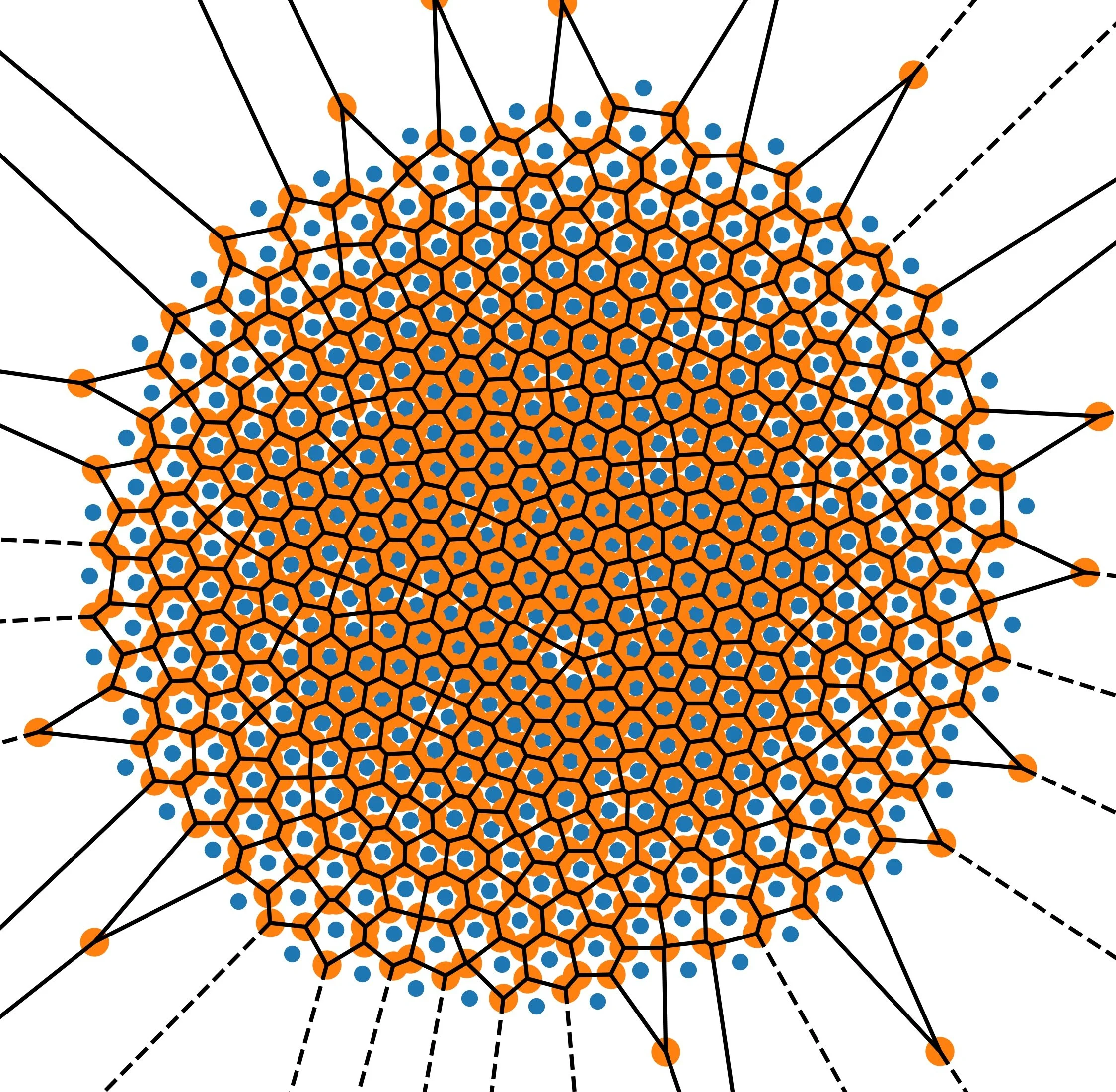
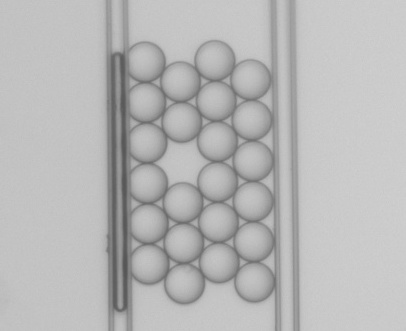
Our second major research theme concerns droplet-based granular systems, where we use monodisperse oil or ferrofluid droplets as model particles for studying the physics of disordered systems. Using a microfluidic “snap-off” technique, we generate droplets that are nearly identical in size and have tunable adhesive interactions. These systems allow us to explore questions central to condensed matter physics: how ordered crystalline aggregates transform into disordered glasses, how flow and clogging occur in granular hoppers, and how avalanches and “crackling” relaxation events emerge in athermal systems. The recent introduction of ferrofluid droplets adds a new capability: magnetic control. This control allows us to study active and tunable interactions that bridge granular physics and active matter.
Our Approach
Though diverse, these efforts share a unifying focus on surfaces, interfaces, and small-scale mechanics. Our experimental approach combines advanced imaging, surface characterization, pico-Newton-level force measurement, and mostly custom-built instrumentation.
At its core, our work is guided by curiosity and a willingness to pursue unexpected detours that lead to discovery. Over time, many such detours have evolved into established research directions that now define our program. Regardless, the overarching theme remains clear: to uncover the fundamental principles that govern soft and living matter.
Interested in joning our group? Please see prospective members and feel free to contact Kari
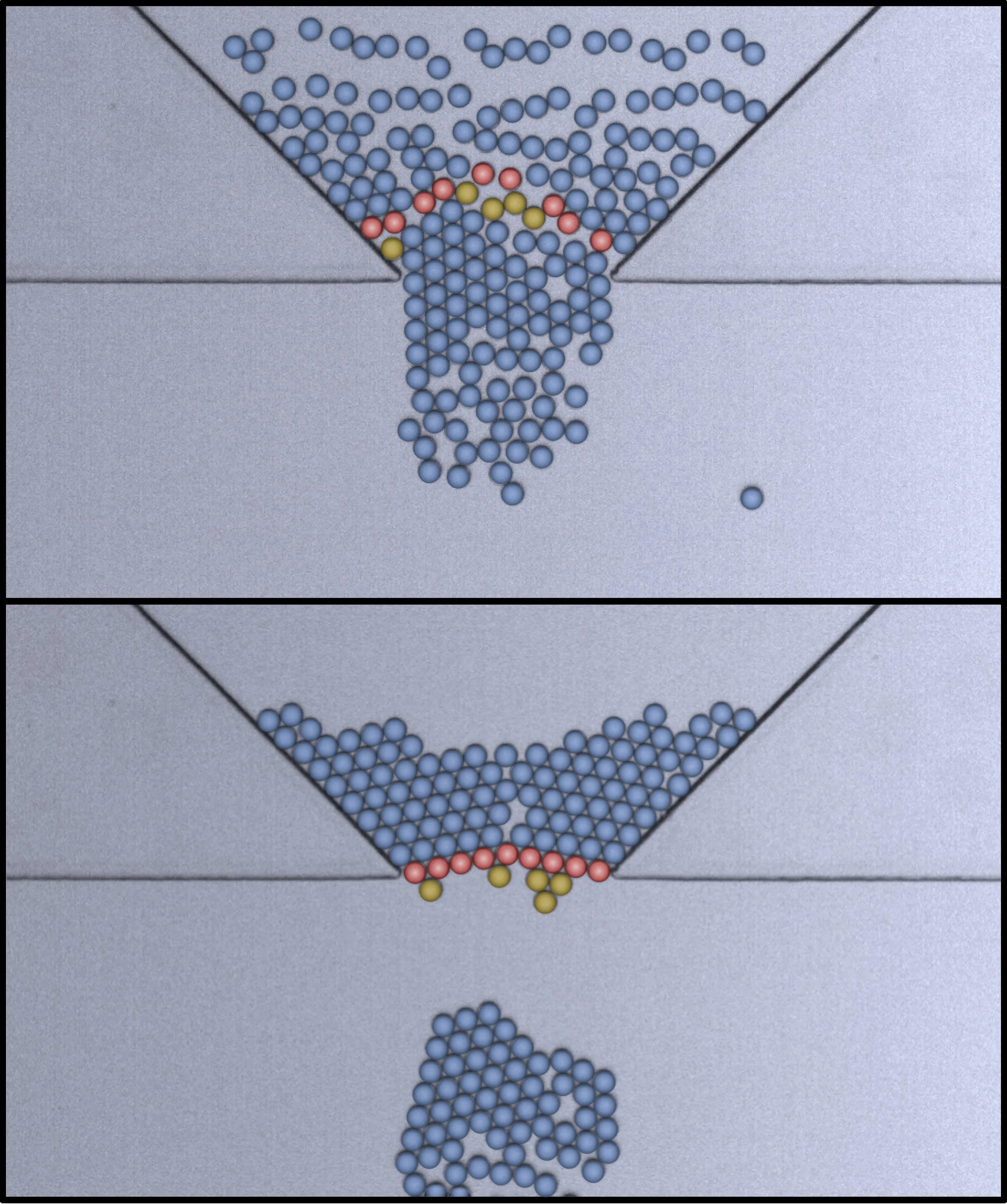
Micro-droplets (~ 10 µm) passing through a constriction, eventually the red droplets form an arch that clogs the hopper. The yellow droplets stick to the arch because of a cohesive interaction.
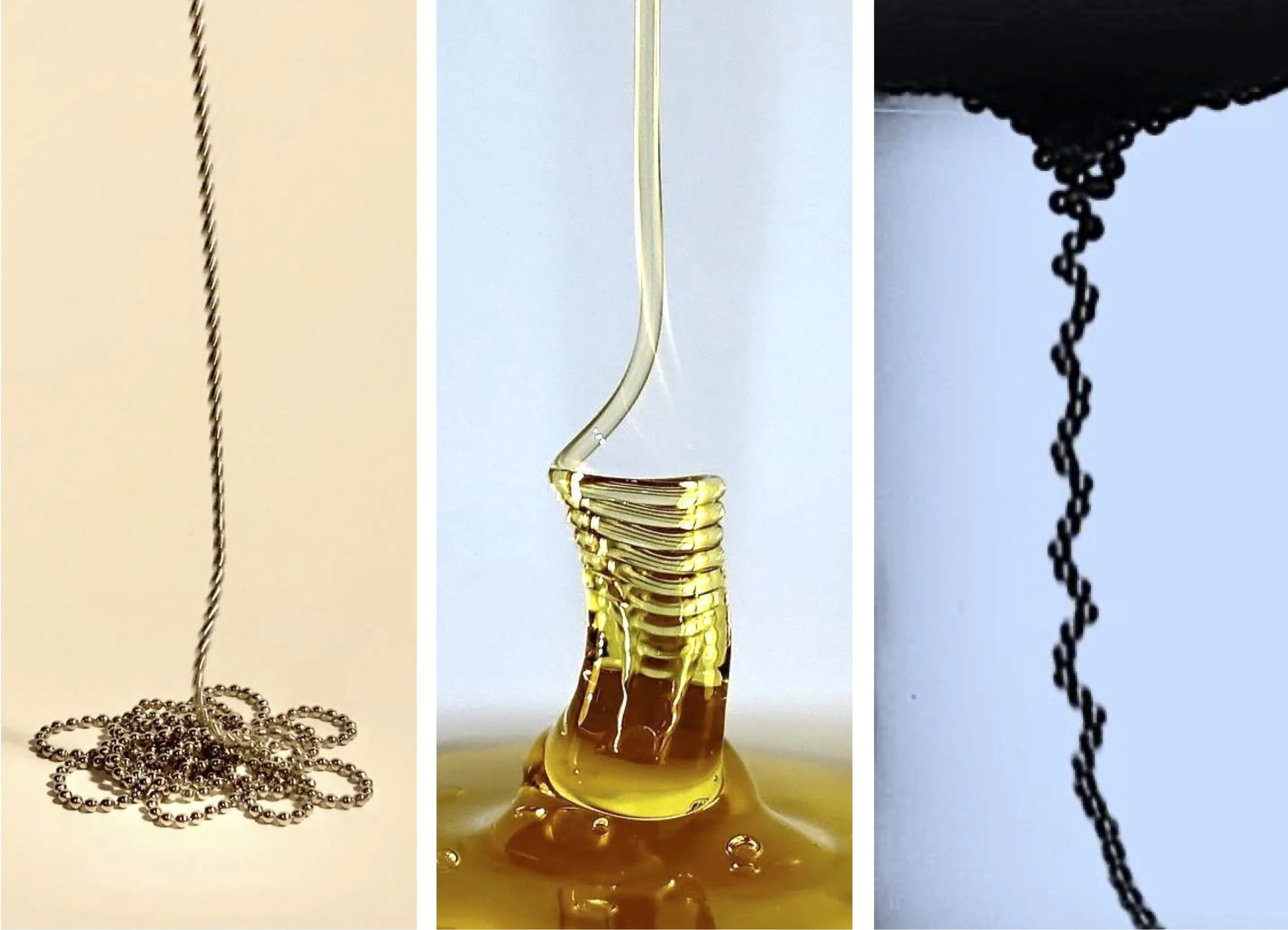
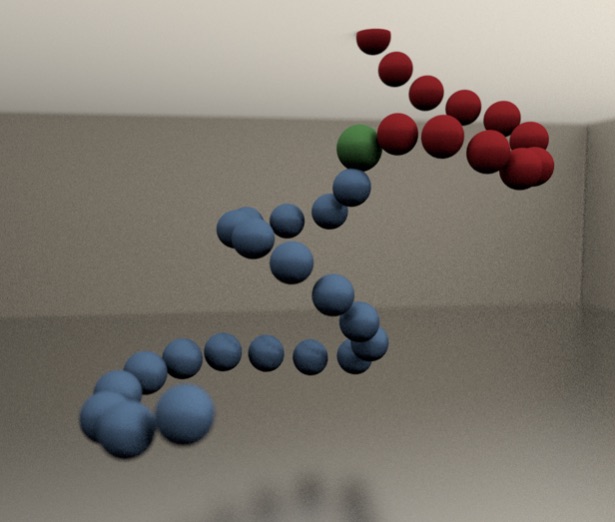
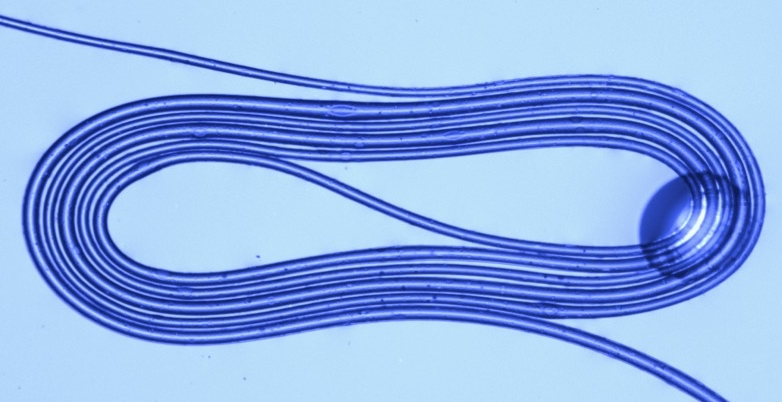
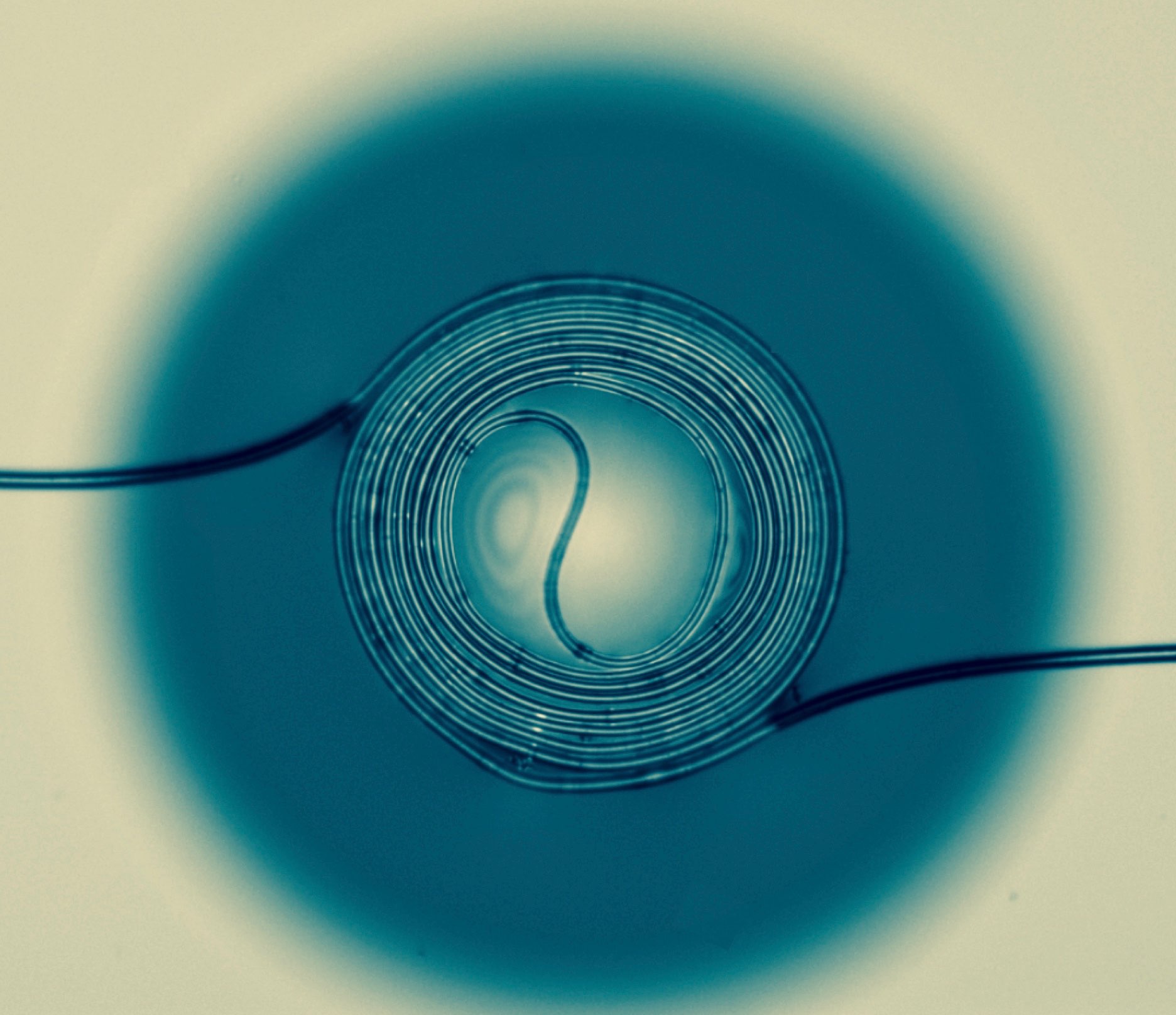
Buckling instabilities resulting in coiling: buckling of bead chain, viscous coiling of Lyle’s golden syrup, and the buckling of a chain of sticky air bubbles rising in an aqueous fluid due to buoyancy (bubble diameter∼ 50 µm).
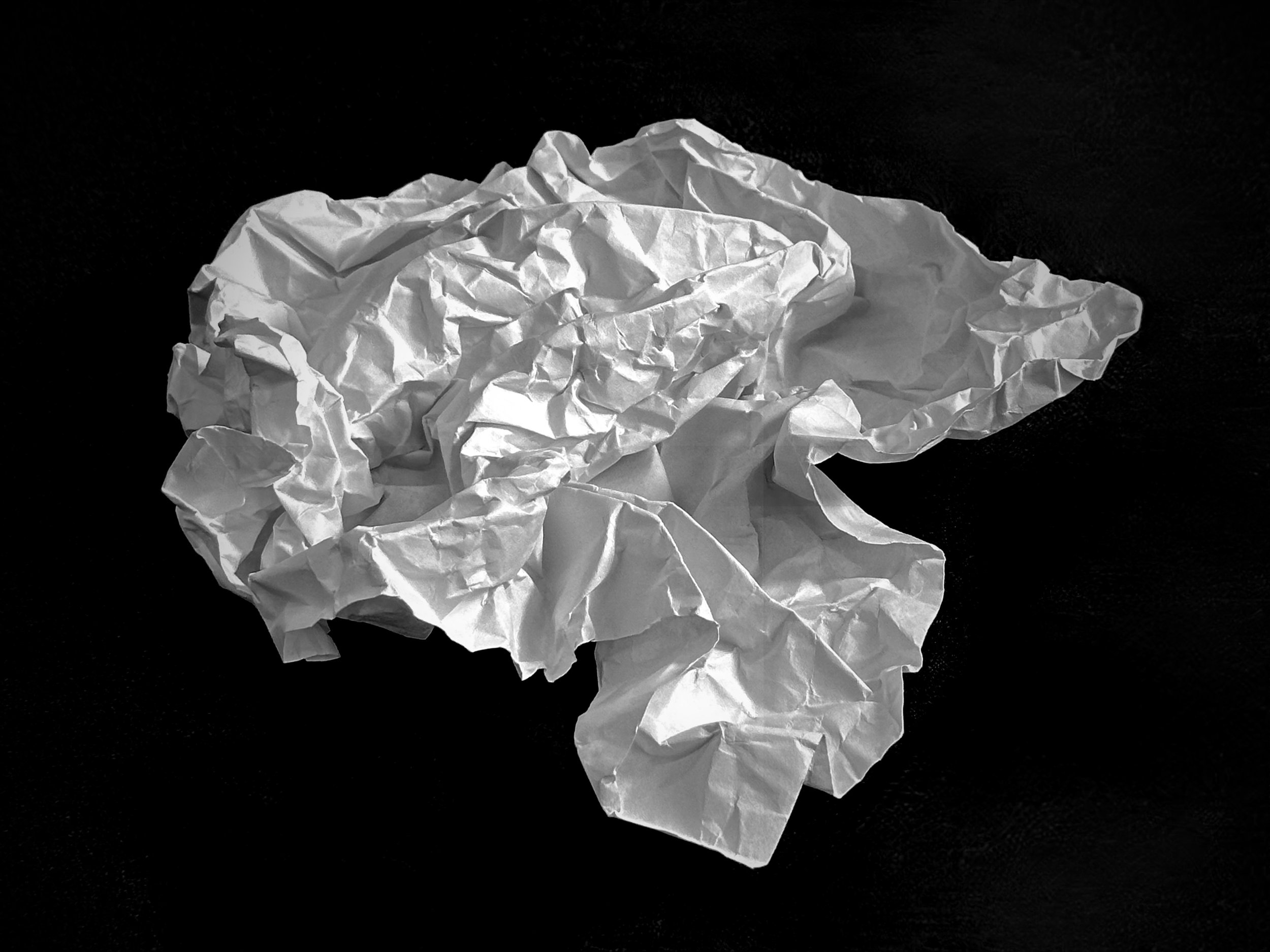
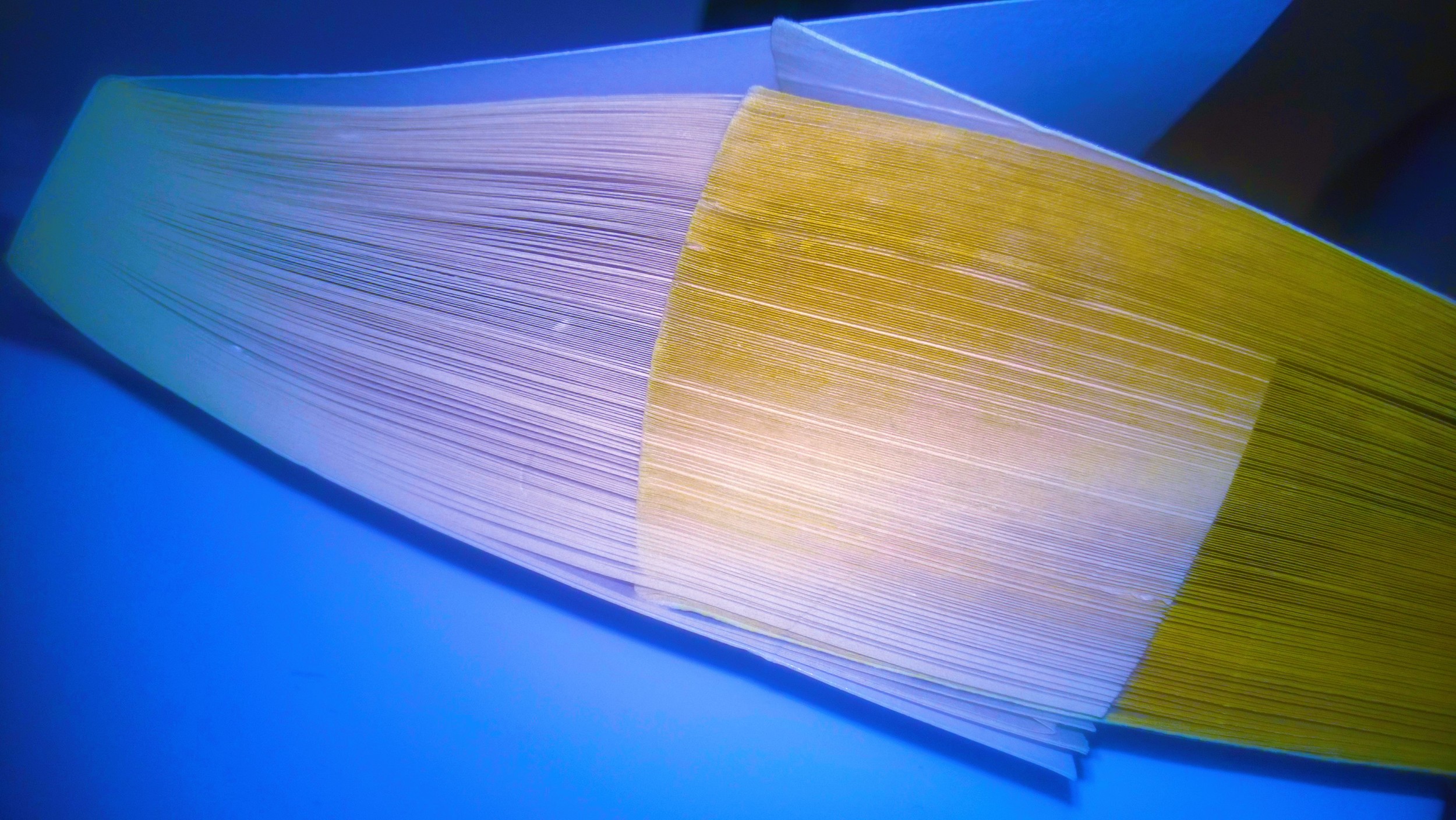
Crumpled sheets can provide insight into the dynamics of structural relaxation in disordered media. Here a simple paper sheet, but in our experiments thin mylar polymer sheets.
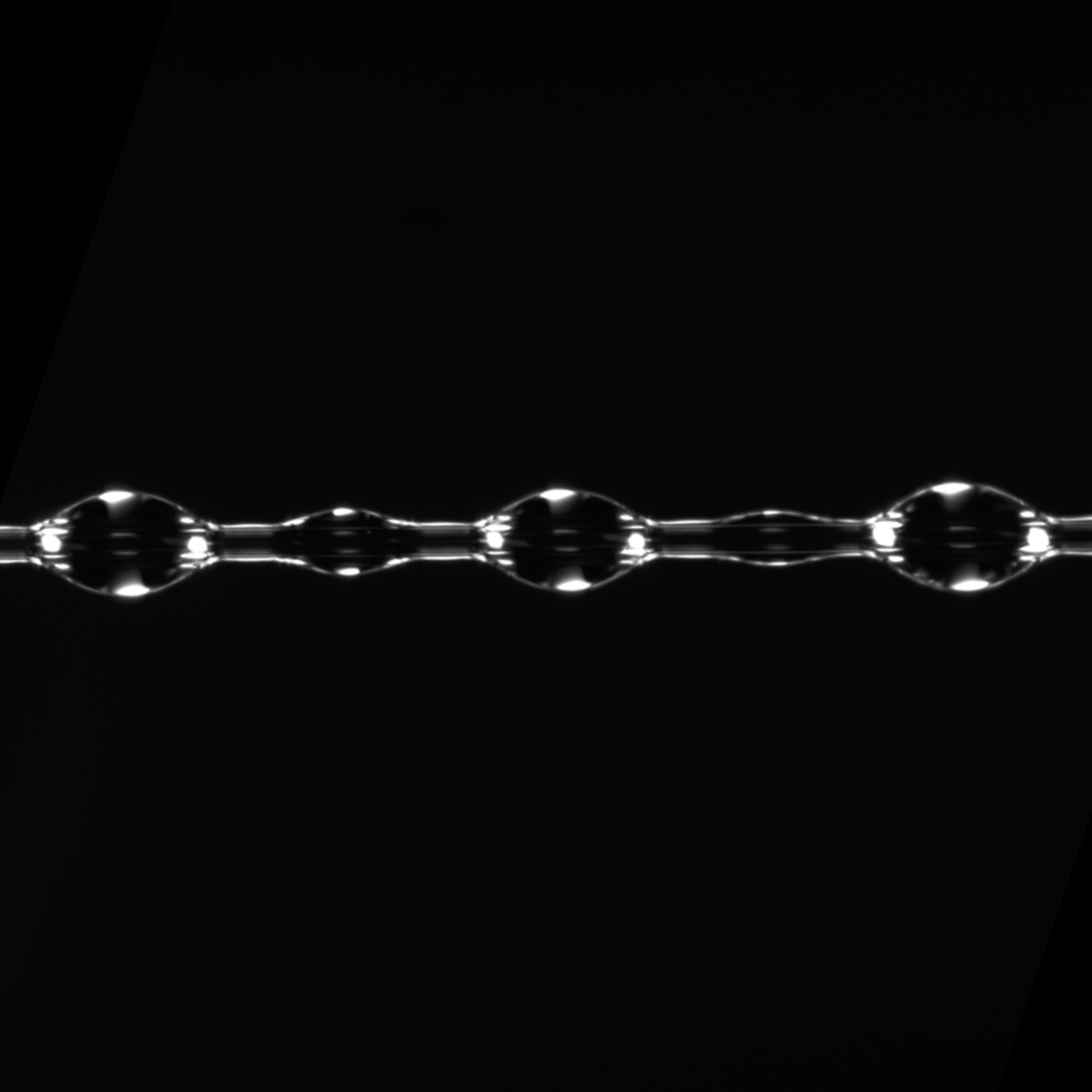
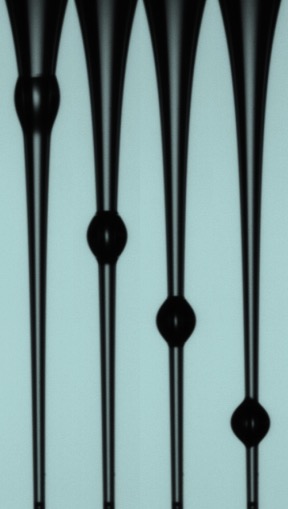
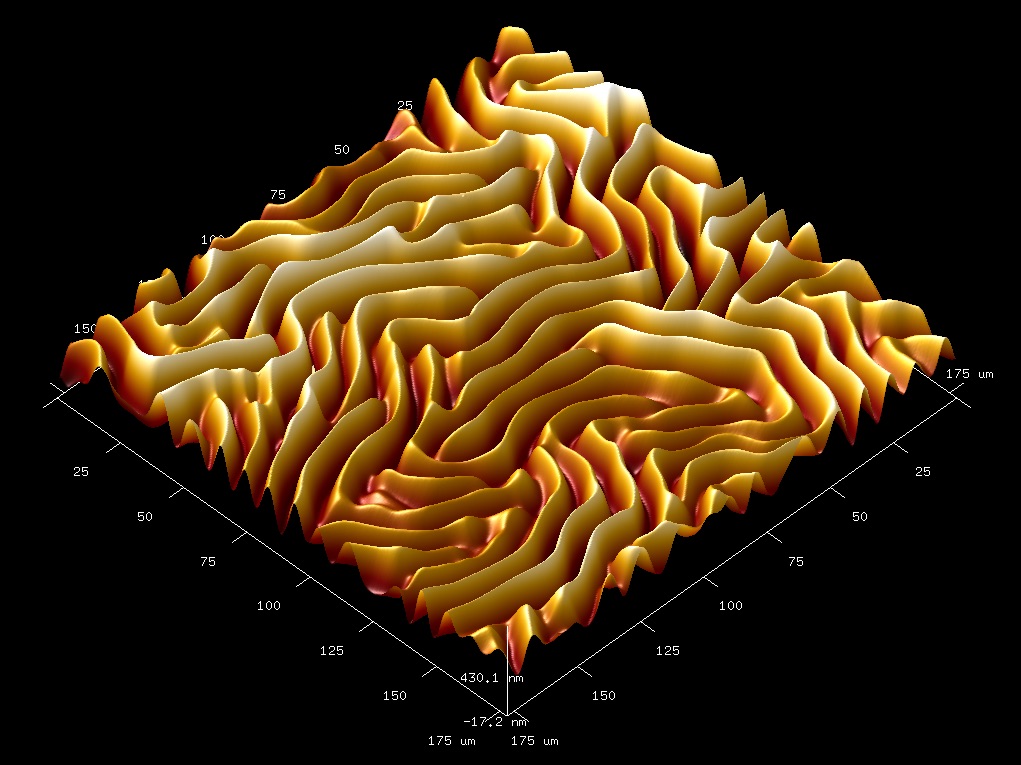
Plateau-Rayleigh instability of polymer coating on a glass fiber

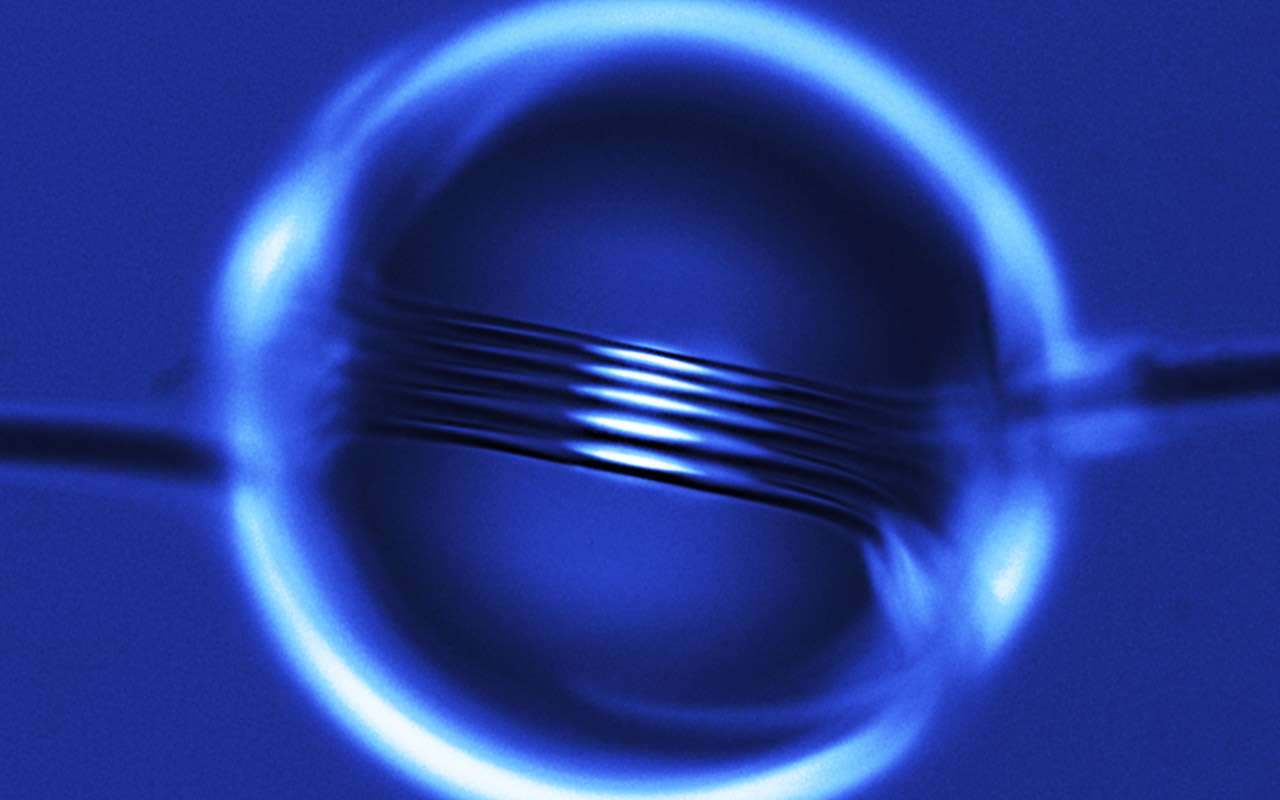
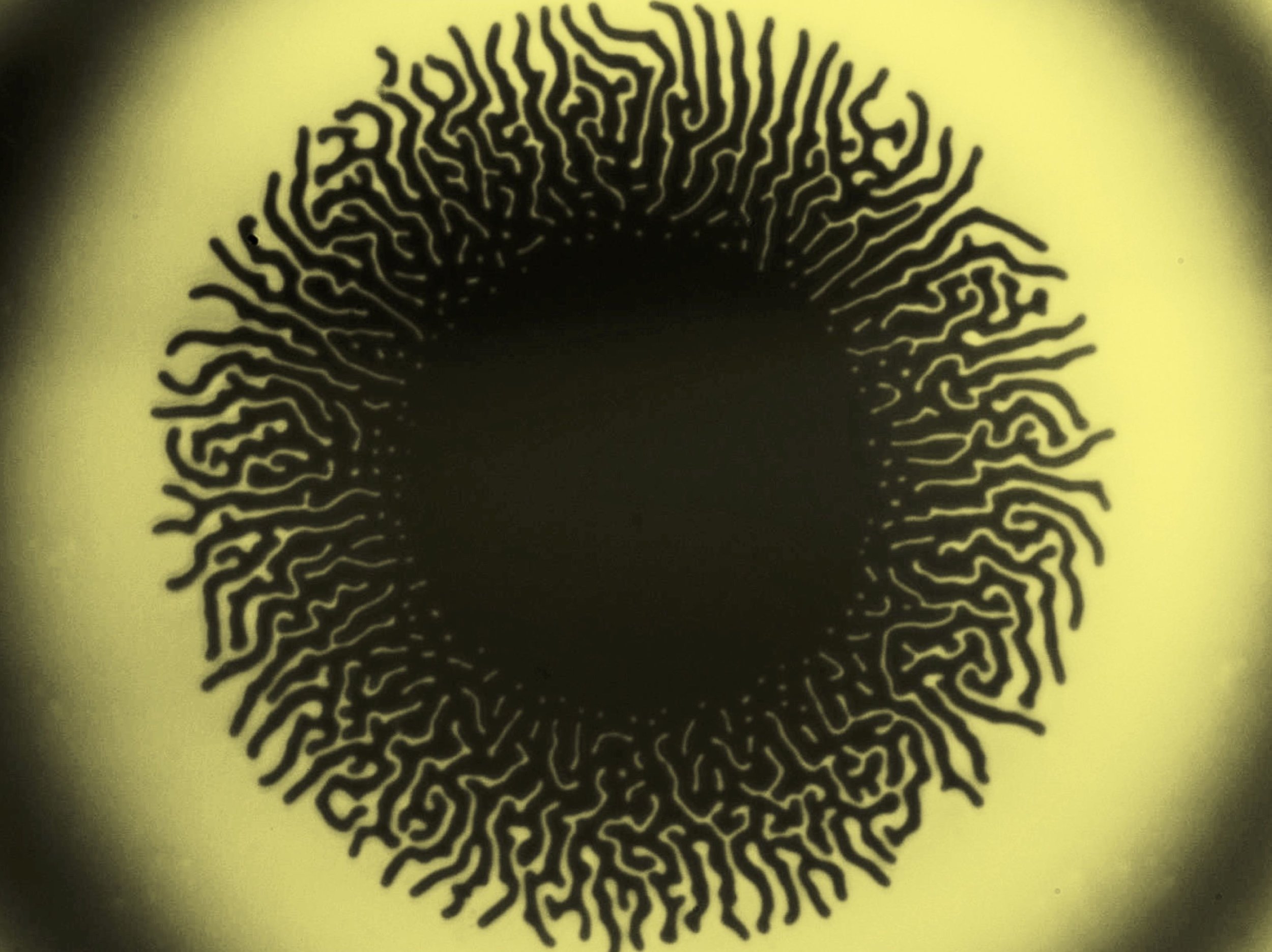
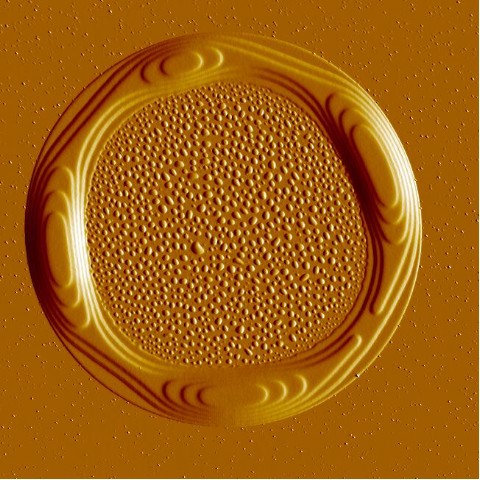
Diblock copolymer liquid ring undergoing a Plateau-Rayleigh instability

Compressing soft colloidal aggregates: perfect 2D crystal with one defect